
Surviving a Home Remodel: Tips for Keeping Your Sanity Intact

Welcome, brave souls, to the wild and wonderful world of home remodeling! If you’re reading this, you’ve likely decided to take the plunge into a large scale remodel or home addition, all while living in the house. Having just come out the other side of my own remodeling adventure, I’m here to share some tips and tricks to help you navigate the chaos.

If you are new to this website, here is a quick overview of my project so you have a frame of reference. My husband and I got married just over a year ago, creating a blended family of ten. We decided to all move into my house, which was only three bedrooms and two bathrooms at the time.
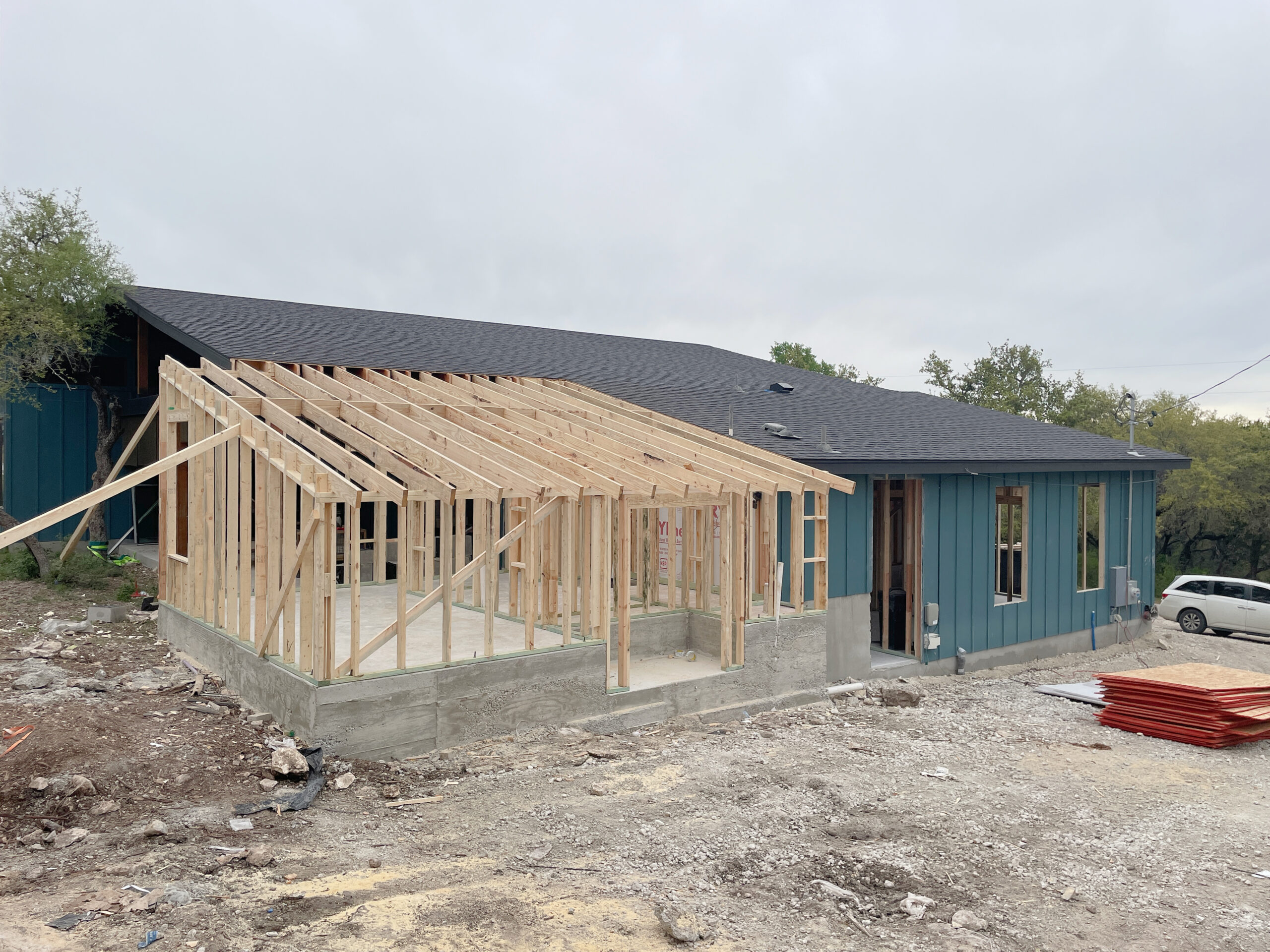
To comfortably fit everyone, we added a whole wing onto my home – four additional bedrooms, a bathroom, and a laundry room. Part of this was converting the previous one car garage, and part was a brand new addition. A large closet was added to the primary bedroom area (on the other end of the house), as well as two-car detached garage. We also moved/added a driveway, fencing, and replaced/removed/added windows throughout the house…it was a whole thing. All with ten people living in three bedrooms.
Here is the good news…we survived, and you can too.
I learned a lot during this process, and here is what I would tell my best friend if she were about to dive into a similar situation.
1. HAVE REALISTIC EXPECTATIONS
I’m putting this first because it’s easily the most important. Heading into your project with the right mindset will have a bigger impact on your experience than anything else on this list.
Often, it’s unmet expectations that are a source of unhappiness and frustration. And by often, I mean every single damn time. You may have hopes of finding contractors that will communicate beautifully, care about your house as much as you do, and work quickly, all while searching high and low for ways to save you money at every turn. While that’s certainly nice to think about, it’s not reality… and if you expect all that to happen, you are going to hate your life.
The key to living through a remodel is setting realistic expectations. But….what do realistic expectations even look like?
I’m going to make this really easy for you. Meet the Triangle of Construction.

As you can see, this triangle has three points, all labeled with a different construction goal – quality work, budget, and timeline. Ideally, your project would be done at a high quality, finished quickly, and completed on budget – aka, good, fast, cheap. However, that isn’t real life and you cannot have all three of those things. You get to choose two.
This means –
- If you want your project to be done quickly and on budget, you cannot expect it to be great quality.
- If you want your project to be great quality and finished on time, then you cannot expect it to be on budget.
- If you want your project to be on budget and great quality, then you cannot expect it to be done quickly.
So, in order for you to go into your construction project with realistic expectations, choose the two that are the most important to you, and refer back to your decision when problems arise.
Because problems will arise.
And when that happens, you will have to decide if you want that problem to be resolved by upping the budget, extending the amount of time the project takes, or forgoing the end result you had hoped for.
This doesn’t mean you have to accept terrible work or fork over your retirement account, but you need to know that you will have to give up something with every decision you make.
Click the play button below for this tip in video form –
2. PREPARE FOR YOUR HOME TO BE DUSTY AND DIRTY
Remodeling is a messy business; there’s no getting around it. The whole process will create a ton of mess, but the drywall dust is the worst. It coats everything in your home, like a mini volcano erupted right in your living room. You can try to put plastic over doorways and furniture, but the dust will find a way.
Before the renovation/addition begins, box up anything small that will be hard to clean (knickknacks and whatnot), roll up rugs, and put plastic over hard-to-clean furniture. You don’t need to empty your house (you still need to live there!), but just look around and make a conscious decision about what is worth packing away and what isn’t.
Tip – Change your HVAC filters frequently to keep the air as clean as possible during a remodel.
My best advice is to NOT constantly clean. It’s HARD not to clean. I was itching to scrub everything because the dust and grime were driving me crazy. I would sweep and mop, and 14 minutes later, it would be gross again. It’s simply not worth the time and effort. Clean the things that keep your house sanitary, and know that the rest will get cleaned eventually (and it will feel AMAZING!)
What readers say:
“We tried to hang plastic in doorways to isolate the dust and mess away from other areas of the house, but it didn’t really matter in the end. My advice is just to be okay with the fact that you can’t control the dust, and then hire a cleaner to deep clean afterward.”
3. PREPARE FOR NONSTOP NOISE
Adding onto/remodeling a home means many months of constant banging, yelling, power tools, blaring music that you didn’t pick, and so many tractors. It starts at about 7 a.m. and lasts through the evening. (Every remodel is different of course, but this is my experience.)

Once again, this comes down to expectations. Don’t expect things to be quiet. You need to prepare for noise 100% of the time, and any quiet days or moments you get are a bonus.
If that doesn’t sound doable, you can set quiet hours or days. Tell your contractor that you don’t want anyone to work on Sundays or after 5 p.m, for example, but just know that this will slow down progress. The total number of noisy days will be the same; they will just be more spread out.
What readers say:
“The best thing I did was treat myself to a nice pair of noise-canceling headphones before my kitchen and dining room remodel. I lived in those things and they saved my sanity.”
4. FIND A PLACE OF SOLITUDE
There will be chaos all around you. Chances are, though, there will be a spot in your house where you can close the door and regain your sanity. Find this place before work begins and set it up for success. This may be you working from home on a makeshift desk in your closet, snuggled up against that sparkly dress you bought but never wore….but at least it’s quiet, no one is watching you, and there isn’t dust on your keyboard.

Set up as many safe zones as you can, so that each member of the family can have a place of relative calm. Somewhere that is off the to-do list, even if its just a bathroom.
Tip – Rotate safe zones if the remodel shifts to different parts of the house. This keeps things fresh and gives everyone a new space to enjoy.
5. PLAN AHEAD, BUT STAY FLEXIBLE
You are going to be making a ton of decisions, don’t save them till the last minute. Choose everything you want for your home (tile, flooring, lighting, paint colors, etc.) ahead of time, making sure you are staying on budget. This will keep things running smoothly, and keep you from last minute stressed out decision fatigue.
At the same time, you need to stay flexible. Perhaps the tile you love is backordered for three months, or the chandelier you chose is now out of stock. I guarantee this will happen at some point. Use your previous selection as a guide and find something else. I promise that when all is said and done, you won’t even remember what your original selection looked like.

5. COMMUNICATE CLEARLY
I feel like I have a unique perspective on this, not only because I just finished a huge home remodel, but also because my husband is a homebuilder. His clients communication styles are all over the map, and I can tell you exactly what your contractor wants from you.
- Put important communication in writing, specifically email. This keeps everything in one place, searchable, and verifiable.
- Limit your emails to one topic each, and title them as such. For example, don’t write a long email titled “Choices” and talk about paint colors, lighting selections, and window dimensions. Instead, make that three separate emails, and write that exact topic in the subject line.
- Communicating clearly means limited communication. Your contractor doesn’t need to hear your inner monologue about how you can’t choose between beige or greige for your wall color, or how your mother in law thinks gold is the best fixture color but you are leaning towards black. I’m not saying you and your contractor need to be fact-sharing robot strangers, but be conscious that over communication can lead to confusion, mistakes, and lots of wasted time.
- At the same time, don’t be afraid to ask if you have a question or concern. Remember, you and your contractor have the same end goal – for you to be happy with the end result and the process. So if something is important to you, tell them. Just make sure to be direct and kind.
6. SET UP A TEMPORARY KITCHEN
If your remodel includes your kitchen, then you are in for an extra dose of fun. I’ve lived in kitchen remodels twice, and it
Pick a spot in your home that’s out of the construction zone, like a corner of the living room, dining room, or even the garage. Then, gather the essentials: a mini fridge, microwave, toaster oven, and maybe even a hot plate or slow cooker. Stock the area with basics like utensils, paper plates, a cutting board, and a few pans. You will also want to think about where you are getting water from/doing dishes. Will you use a water jug and a plastic container, or set up a wash station with the hose in the backyard? I can’t tell you the right answer, but you need to come up with something and set it up ahead of time.

Also, keep meals simple— you can absolutely feed your family sandwiches for dinner.
7. CREATE A POSITIVE WORK ENVIRONMENT
You wouldn’t want to work for a grumpy, demanding, impossible-to-please boss and neither do your contractors. You are responsible for setting the tone of your remodel, and the energy you bring to your home remodel can either make or break the experience—not just for you but for everyone involved.
Living in a remodel is stressful, but approaching it with kindness and patience can make a world of difference. A simple “thank you” or compliment on a job well done goes a long way and makes people feel appreciated, which usually leads to better work. Remember a time when someone treated you terribly and you secretly wanted to slash their tires? Now imagine people feeling that way while remodeling your kitchen. So, instead of placing blame or getting overly emotional when a problem arises, focus on finding a solution.
What readers say:
“I can be scared to speak up when I have a problem, so I create a personality of being happy with the work. Then, when I don’t have a specific compliment, the contractor knows something is wrong, which eases giving bad news. Also, people like working for happy, thankful managers/homeowners.”
8. REMEMBER THAT PERFECTION ISN’T A REAL THING
When you are in the middle of a remodel, everything feels like a big deal. Every imperfection feels like it will bother you forever. How will you ever NOT notice that mistake?! I’m here to tell you that you will absolutely not be losing sleep over that flaw after your remodel is over and normal life resumes.

The truth is, no project will turn out exactly as you envisioned. Maybe that backsplash tile doesn’t align perfectly, or the trim isn’t exactly the shade you wanted, or that light fixture in two inches off center. That’s okay. Embrace these quirks as part of your home’s story. They add character and remind you of the journey you went through to create your space.
Keep your eye on the prize and remember why you started this remodel in the first place. If the overall outcome meets your needs and brings you joy, then minor imperfections are just that—minor.
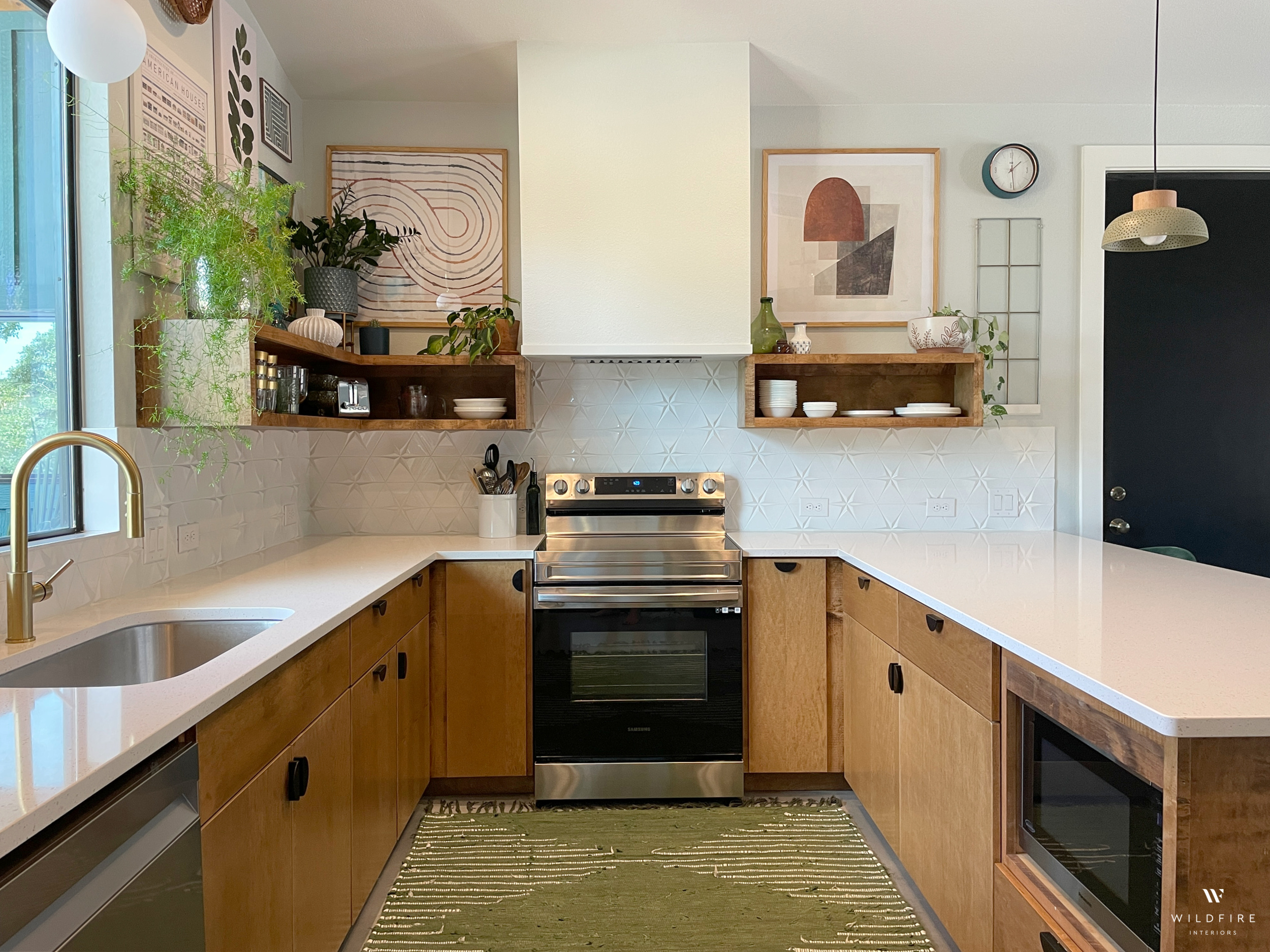
So there you have it, my top 8 tips for surviving a home remodel. I can tell you from experience that the most challenging part is living in the project…especially when the project is everywhere. But before you know it, you’ll be enjoying your beautiful new space, and the dust, noise, and stress will be a distant memory.
Excellent advice from a wise woman who survived her major house transformation. She not only preaches it but applied it. I was amazed at her calm in the storm.
Thanks Mom ❤️
I did a nearly whole house remodel during quarantine- kitchen, bath, new plumbing, new electrical, all new floors in the whole house tore down a wall, and converted an old garage into my dining room. These tips are spot on! It takes patience, a space to retreat, good communication skills, and more chocolate than I knew existed, but you can get through it. This too shall pass… maybe like a kidney stone, but this too shall pass.
Like a kidney stone, lol. It’s true though.
These are such good points! Things like constant noise not of your choosing is one that bothers me a ton. I also love the reader tip about creating a happy personality to interact with the contractor. I have a history of coming off as too task focused and being nonchalant about a job well done because that’s what I expect to get, but am grumpy/uptight about mistakes that need to be fixed. Faking a bubbly personality to keep the team on my side is actually a really good tip for me (and thank goodness I trained in theater LOL).
I absolutly love that you know this about yourself…that’s a huge part of the battle right there.
I hear what you are saying about the dirt and dust but boy howdy! I would have such a hard time with that one!!
Your bangs are so what I want mine to look like, lol. I love them.
Glad you seem to have survived the Reno. Thanks for sharing.
Wow, what a fun and relatable introduction to the remodeling journey! Your experience and tips are invaluable for anyone brave enough to tackle a large-scale remodel while still living in the house. It’s refreshing to see such an honest and helpful take on navigating the chaos—your insights make the process feel a little less daunting and a lot more exciting. Thank you for sharing your wisdom!
What an inspiring and relatable introduction to the world of home remodeling! Your energy and humor immediately draw readers in, turning what can feel like a daunting process into an exciting adventure. I can’t wait to dive into the tips and tricks you’ve shared, knowing they come from firsthand experience. Thank you for making the remodeling journey feel a little less chaotic and a lot more manageable!”
This is a fantastic guide on surviving a home remodel! It’s not easy to live through a renovation, especially when it involves a big addition or overhaul like yours. The “Triangle of Construction” is especially eye-opening—it’s so true that you can’t have everything (good, fast, and cheap) at once! I love the reminder to have realistic expectations from the start and to embrace imperfections as part of the home’s story. And the advice on setting up temporary kitchens, finding a quiet place to retreat, and communicating clearly with contractors is super practical.
Living through a remodel can feel like an emotional rollercoaster, but with this mindset, you can actually enjoy the process and emerge with a beautiful, customized home. This post is an excellent resource for anyone diving into a renovation project!
Thank you for this incredibly helpful guide on surviving a home remodel! As someone currently in the middle of renovating my kitchen, I can completely relate to the chaos and stress that comes with it. The tip about setting up a temporary ‘home base’ (like a coffee station or mini-fridge) was genius—I hadn’t thought of that, but it would have made the past few weeks so much easier
What a truly practical and reassuring guide for anyone navigating a home remodel! I especially appreciate the unapologetic warning about dust-it will infiltrate everything, and prepping with sealed spaces and frequent HVAC filter changes is a smart, realistic strategy. The tips on managing constant noise-like setting ‘quiet hours’ or negotiating work windows are a lifesaver for maintaining your sanity. Your reminder to create a clear “safe zone,” a clean, calm space untouched by construction, is golden. It gives your family a haven to retreat to amid the chaos. And the advice to stock up on paper plates, set up a makeshift kitchen, and maintain routines is incredibly helpful, simple steps that make a world of difference. Overall, this is a compassionate, down-to-earth playbook for staying sane and organized during what can feel like a long renovation journey. Thanks for sharing these lifesaving survival tips!